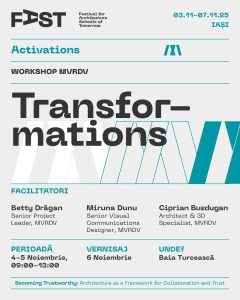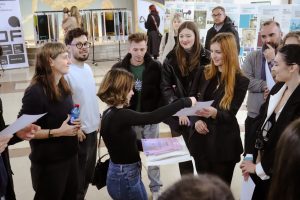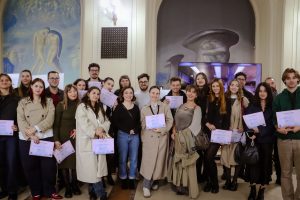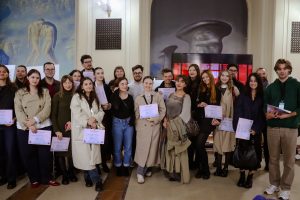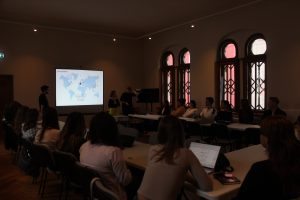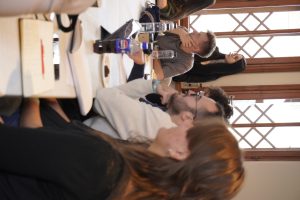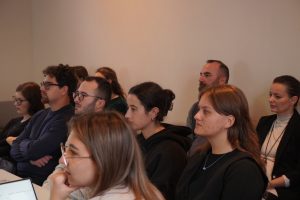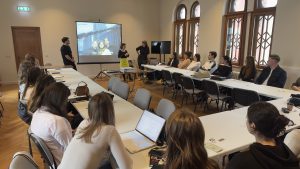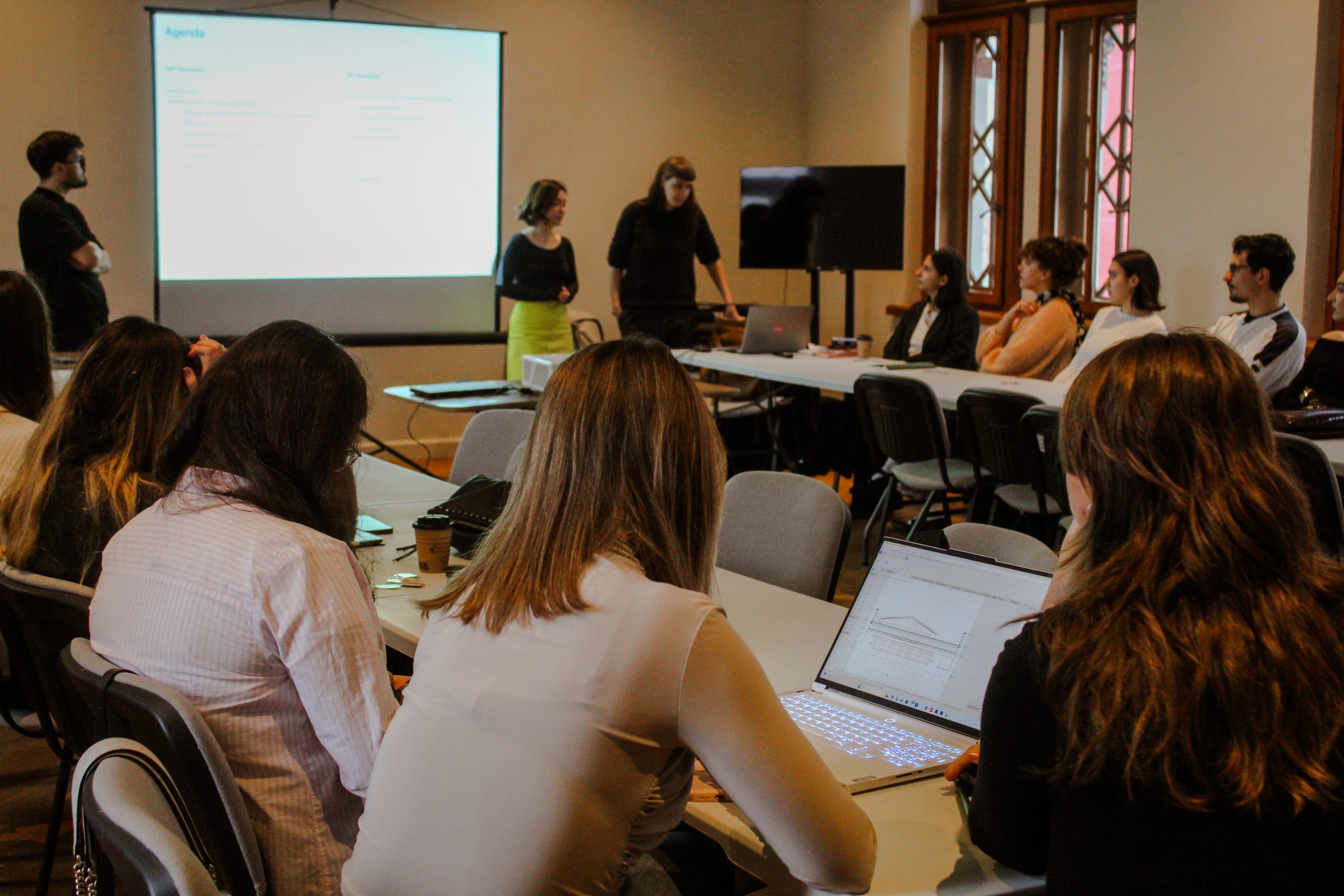
The MVRDV Transformations workshop took place on 4–5 November 2025, at Baia Turcească in Iași, bringing together 25 architecture students organized into five mixed teams composed of students from different schools. The workshop was facilitated by Betty Drăgan (Senior Project Leader, MVRDV), Miruna Dunu (Senior Visual Communications Designer, MVRDV), and Ciprian Buzdugan (Architect & 3D Specialist, MVRDV). Designed for students in their third year or above, the atelier offered a direct encounter with contemporary professional practice and sustainability-driven architectural thinking.
The workshop explored the potential for reinventing existing built environments and examined the evolving role of architects in adapting buildings to present-day needs. Participants worked on real sites in Iași, proposing speculative interventions that integrated sustainability, circularity, and ecological impact from the earliest conceptual stages. The emphasis was not only on form, but on measurable responsibility and long-term environmental awareness.
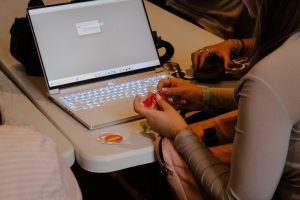
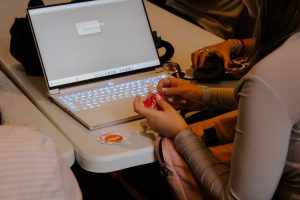
Before the in-person sessions, students participated in an online preparatory meeting where they installed and tested CarbonScape, a digital tool used to evaluate environmental impact, and formed their working teams. This step established a shared technical framework and introduced participants to professional workflows used in international practice.
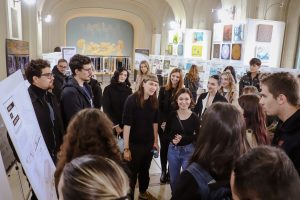
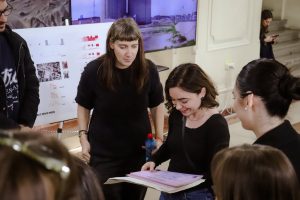
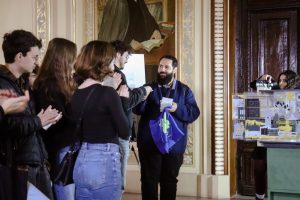
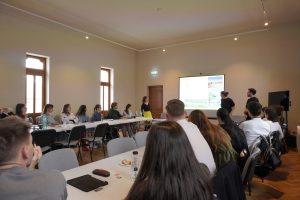
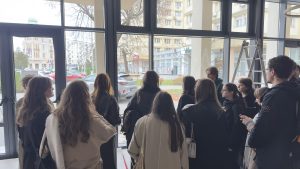
During the two workshop days, students attended a theoretical introduction and a presentation of MVRDV’s design philosophy, followed by site visits and intensive teamwork. Each group developed conceptual proposals that balanced architectural ambition with environmental accountability. The collaborative structure encouraged exchange across academic backgrounds and fostered a studio atmosphere similar to a professional design office.
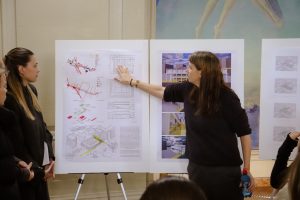
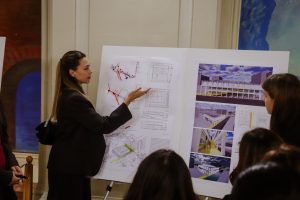
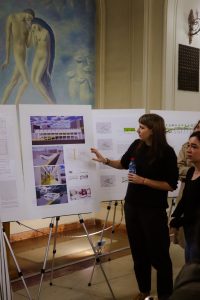
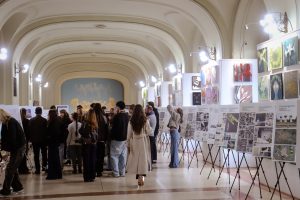
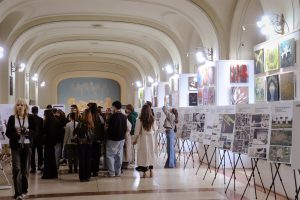
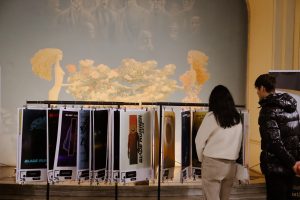
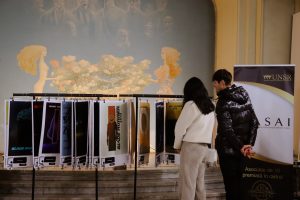
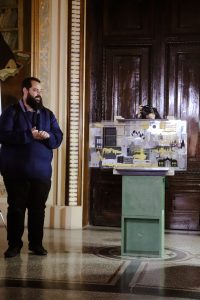
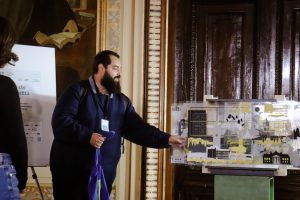
The final outcomes were presented in the Transformations Exhibition, alongside MVRDV’s curatorial materials such as Carbon Confessions and ABC of Sustainability, placing student work within a broader global conversation about climate-conscious architecture. The results were shared publicly during a vernissage on 6 November 2025.
The workshop was highly appreciated for generating a rigorous, hands-on learning experience that connected academic experimentation with real professional methodologies. Students explored adaptive reuse, sustainability metrics, and collaborative design processes while working closely with practicing architects from a leading international office. The atelier demonstrated how architectural education can merge speculative creativity with measurable ecological responsibility, equipping future architects with tools relevant to contemporary practice.
Photo credit – Codau Alexandra, Toma Raluca, Graciov Delia