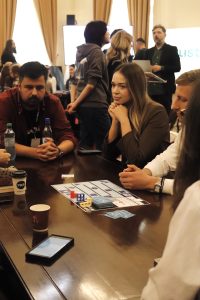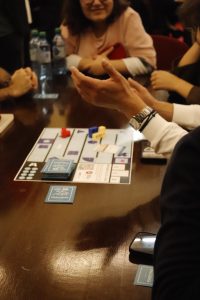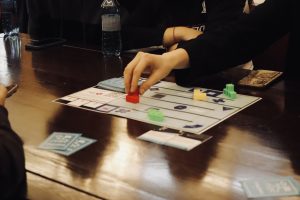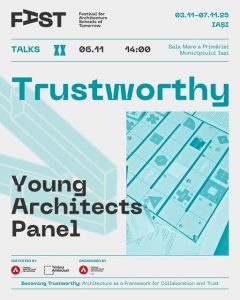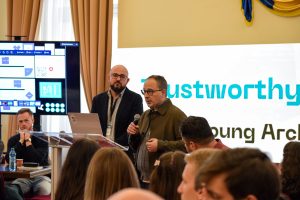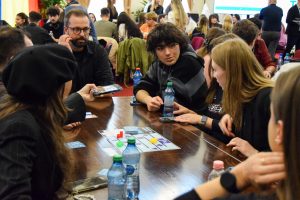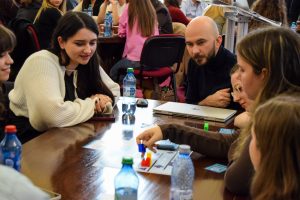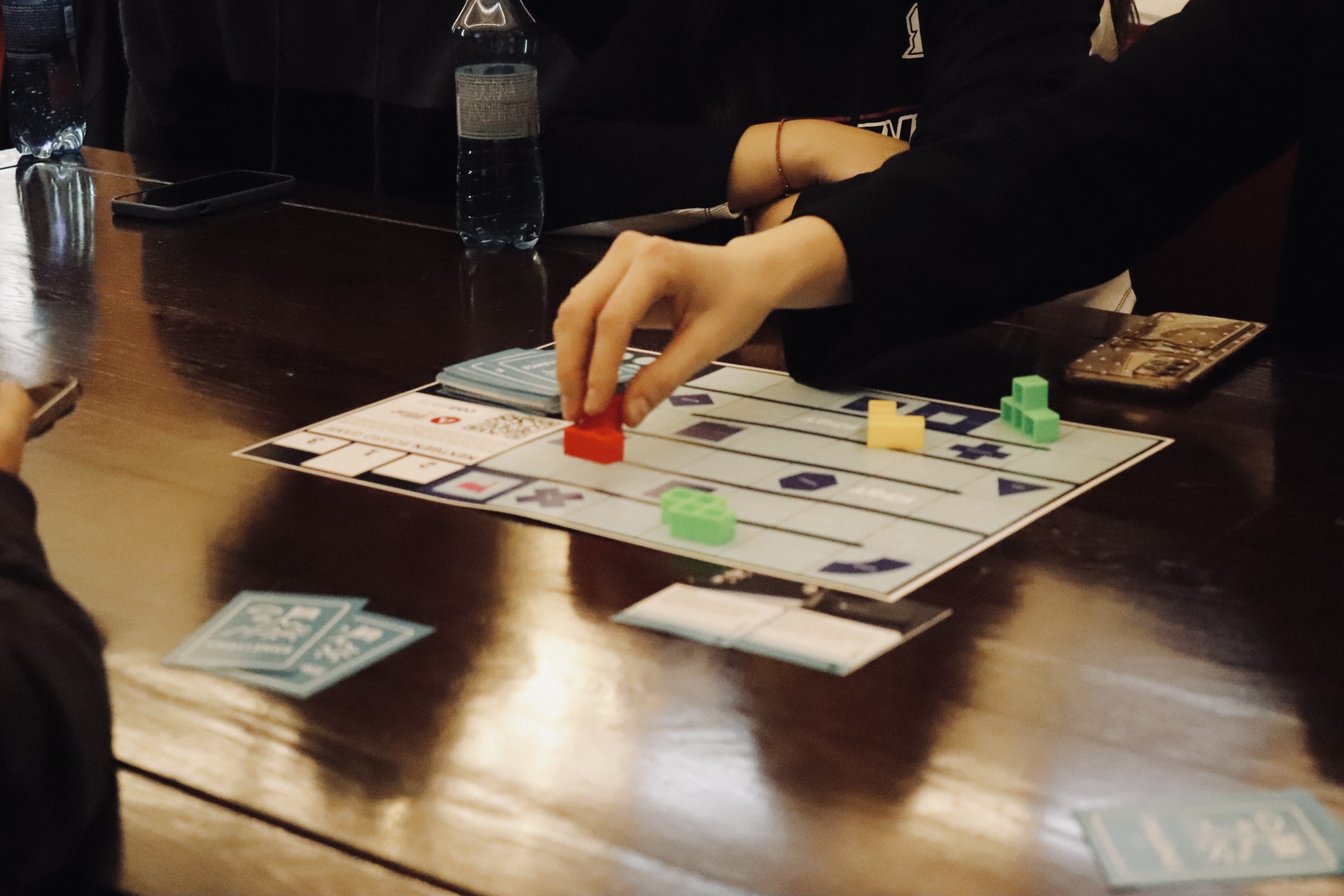
On the fourth day of the FAST festival, on November 6, Iași City Hall hosted one of the most anticipated sessions for early-career architects: Trustworthy – Young Architects Panel. The event marked the launch of “Nextgen,” an educational board game designed to simulate not only the formal steps of a job interview in an architecture office, but also the informal cues and unspoken dynamics that often shape hiring outcomes.
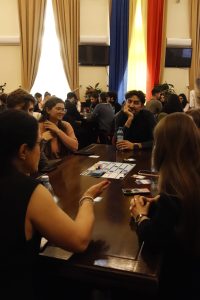
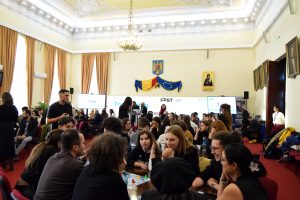
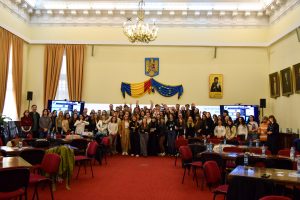
The turnout spoke for itself; the venue quickly proved too small: the room filled beyond capacity, and the audience’s focus made it clear how relevant this topic felt to students and young architects. Many arrived looking for something rarely offered in school, a space where the realities of entering the profession could be explored honestly, without judgment.
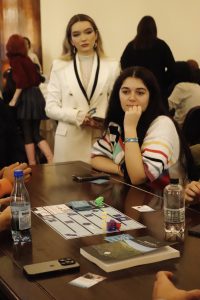
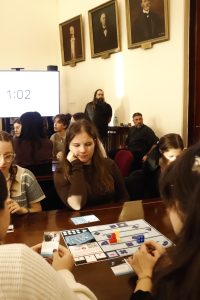
Through the game, participants moved through interview-style scenarios in a safe, low-stakes environment. Instead of performing under pressure, they tested responses, reflected on outcomes, and compared experiences with peers. The game-based format encouraged openness and active participation, turning what could have been a standard panel into a hands-on learning experience.
As the rounds unfolded, the game brought forward a set of needs that young architects often carry quietly into their first interviews. Participants discussed managing nerves and anxiety, dealing with ambiguity, and understanding what employers truly looked for beyond a polished CV or portfolio. Just as importantly, the session created a collaborative space for questions that were rarely addressed during formal education:
- How did you set boundaries early on?
- What did a healthy professional relationship look like inside a studio?
- How did you ask the right questions without sounding “difficult”?
- And how did you read an office culture before committing to it?
The conversations that followed each gameplay moment highlighted a key point: a strong portfolio did not tell the whole story. Communication, adaptability, clarity in real-time discussion, and the ability to “read the room” often mattered just as much, yet these were skills most participants had little chance to practice in academic settings. In that sense, “Nextgen” functioned as more than a learning tool; it became a shared reflection on the transition from university to professional life.
The board game was developed by architect Alexandru Sescioreanu, drawing on more than eight years of direct experience working with interns in his own office. That practical background showed in the realism of the scenarios, and in how quickly participants recognized themselves in the situations the game proposed.
By the end of the session, attendees left with concrete insights and a strong sense of community: reassurance that their concerns were shared, and that the “hidden curriculum” of interviews could be learned, practiced, and discussed openly. The full room and the depth of engagement turned the event into a standout moment of this FAST edition, confirming that the next generation sought not only technical competence, but also guidance for navigating the human side of architectural practice.
Photo credit: Costoaea Anghelina, Avasilcai Maria On the fourth day of the FAST festival, on November 6, Iași City Hall hosted one of the most anticipated sessions for early-career architects: Trustworthy – Young Architects Panel. The event marked the launch of “Nextgen,” an educational board game designed to simulate not only the formal steps of a job interview in an architecture office, but also the informal cues and unspoken dynamics that often shape hiring outcomes.
The turnout spoke for itself; the venue quickly proved too small: the room filled beyond capacity, and the audience’s focus made it clear how relevant this topic felt to students and young architects. Many arrived looking for something rarely offered in school, a space where the realities of entering the profession could be explored honestly, without judgment.
Through the game, participants moved through interview-style scenarios in a safe, low-stakes environment. Instead of performing under pressure, they tested responses, reflected on outcomes, and compared experiences with peers. The game-based format encouraged openness and active participation, turning what could have been a standard panel into a hands-on learning experience.
As the rounds unfolded, the game brought forward a set of needs that young architects often carry quietly into their first interviews. Participants discussed managing nerves and anxiety, dealing with ambiguity, and understanding what employers truly looked for beyond a polished CV or portfolio. Just as importantly, the session created a collaborative space for questions that were rarely addressed during formal education:
- How did you set boundaries early on?
- What did a healthy professional relationship look like inside a studio?
- How did you ask the right questions without sounding “difficult”?
- And how did you read an office culture before committing to it?
The conversations that followed each gameplay moment highlighted a key point: a strong portfolio did not tell the whole story. Communication, adaptability, clarity in real-time discussion, and the ability to “read the room” often mattered just as much, yet these were skills most participants had little chance to practice in academic settings. In that sense, “Nextgen” functioned as more than a learning tool; it became a shared reflection on the transition from university to professional life.
The board game was developed by architect Alexandru Sescioreanu, drawing on more than eight years of direct experience working with interns in his own office. That practical background showed in the realism of the scenarios, and in how quickly participants recognized themselves in the situations the game proposed.
By the end of the session, attendees left with concrete insights and a strong sense of community: reassurance that their concerns were shared, and that the “hidden curriculum” of interviews could be learned, practiced, and discussed openly. The full room and the depth of engagement turned the event into a standout moment of this FAST edition, confirming that the next generation sought not only technical competence, but also guidance for navigating the human side of architectural practice.
Photo credit: Costoaea Anghelina, Avasilcai Maria