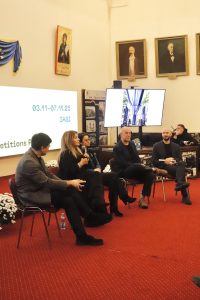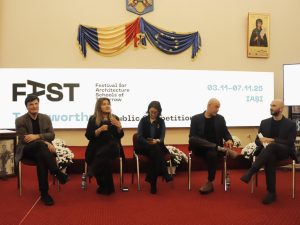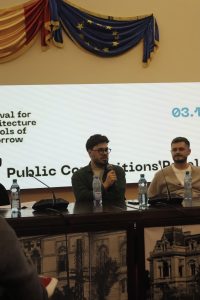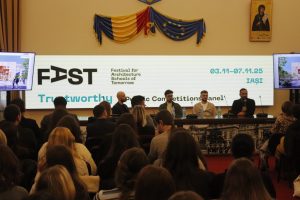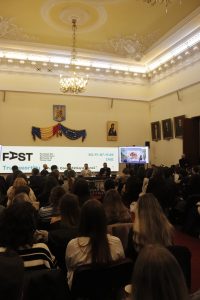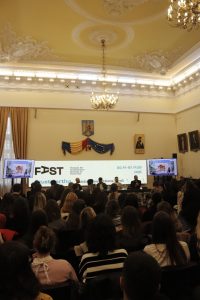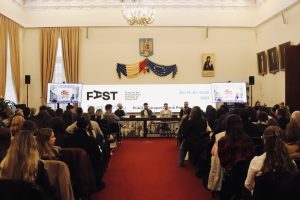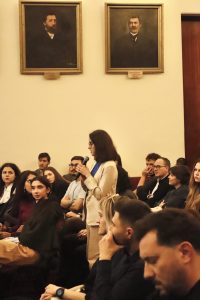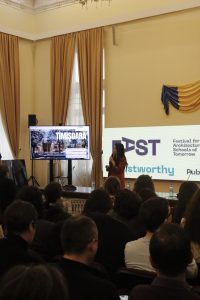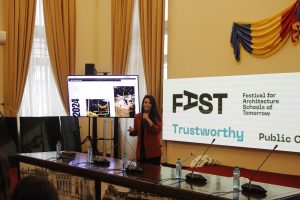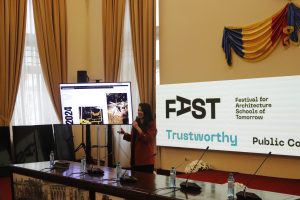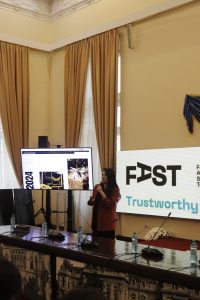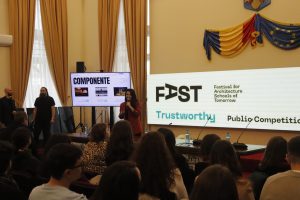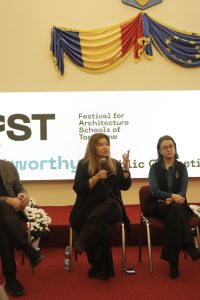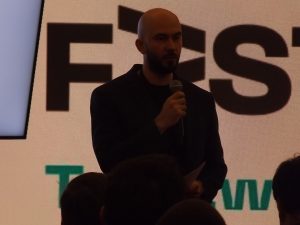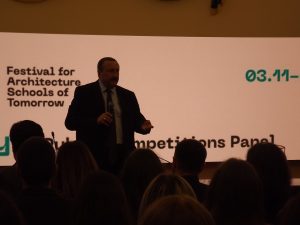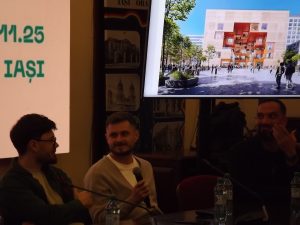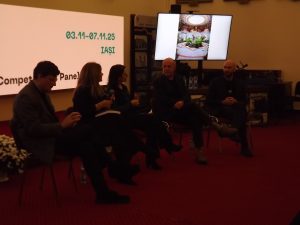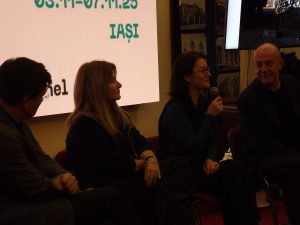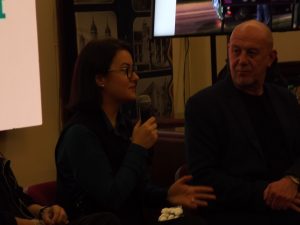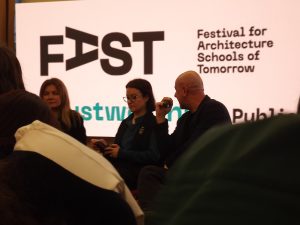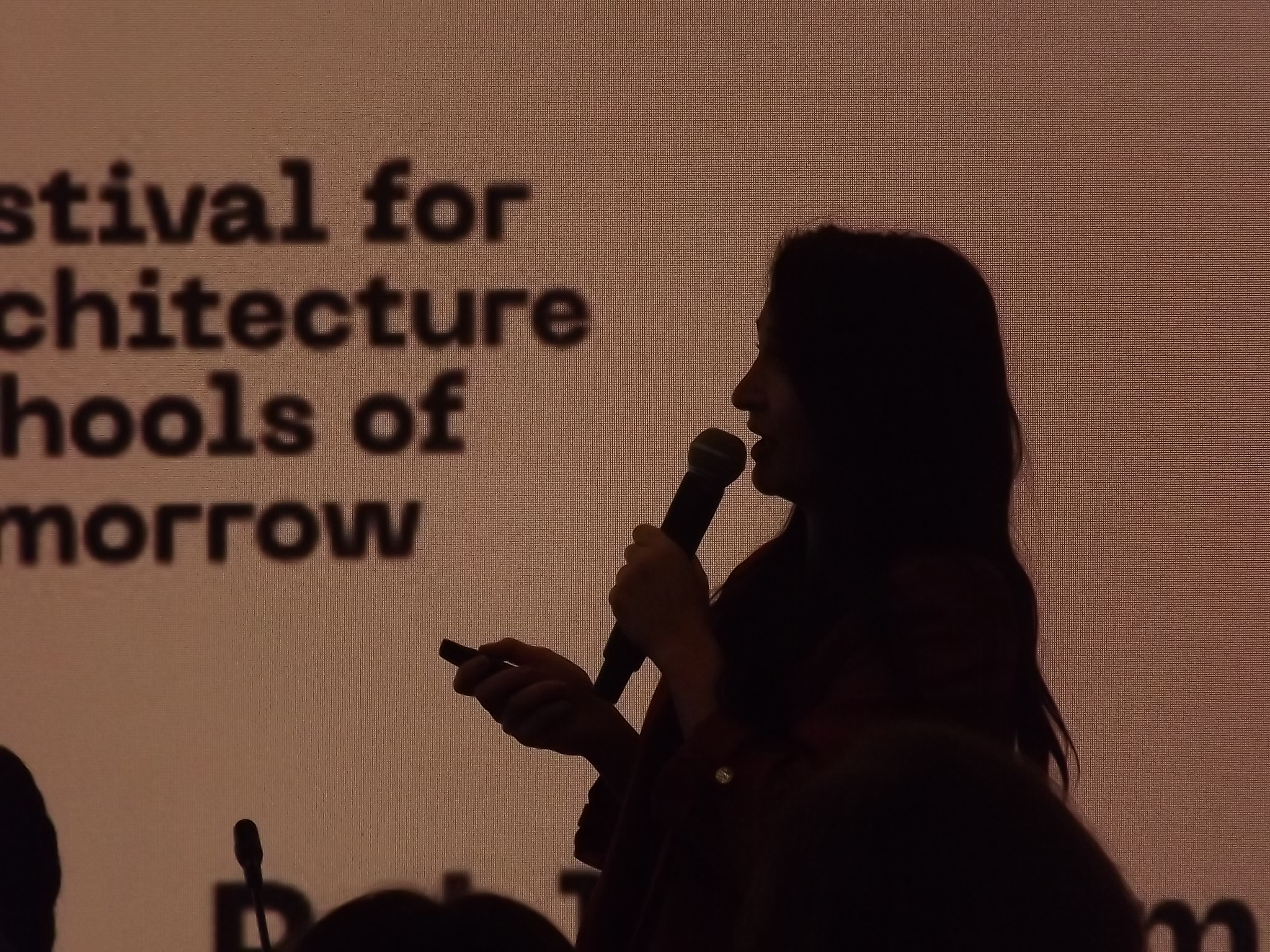
The panel Trustworthy – Public Competitions, organized by the Iași Branch of the Romanian Order of Architects as part of the #TALKS section of FAST 2025, took place on the third day of the festival and addressed one of the central themes of this edition: how architecture can operate as a medium of trust. Hosted at the Iași City Hall on November 5, 2025, the discussion focused on the role of public competitions in strengthening transparency, professional responsibility, and quality in the built environment.
Starting from the premise that competitions are not merely procedural tools but cultural instruments, the panel explored how fair and well-structured selection processes can reinforce public confidence in architecture. The conversation examined key questions: how trust can be cultivated through open competitions, and what transparency and accountability truly mean when selecting projects that shape public space. Participants emphasized that competitions can function as frameworks that protect both professional integrity and the public interest, provided they are governed by clear criteria and consistent institutional commitment.
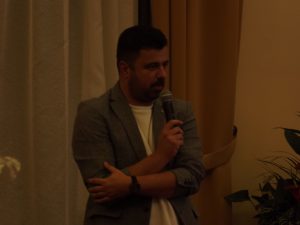
The session was moderated by Andrei Bodnar, vice president of the Iași territorial branch of the Romanian Order of Architects, who guided a dialogue between institutional representatives and international experts. The panel brought together Ștefan Bâlici, president of the Romanian Order of Architects, Ciprian Buzdugan of MVRDV, Amalia Enache, coordinator of education and professional development activities within OAR, Alexandru Mihalachi of MORA Architects, Irina Schrotter representing the Federation of Employers in the Creative Industries, architect Dan Clinci, Alexandrina Dinga from the CIVICA Association, and architect Claudiu Ionescu.
Speakers reflected on both Romanian and international practices, highlighting the need for coherent policies that support competitions as instruments of long-term urban quality. Several interventions pointed to the importance of interdisciplinary collaboration and public communication, arguing that trust emerges not only from technical rigor but also from openness toward communities and stakeholders. By framing competitions as civic platforms rather than isolated professional events, the discussion positioned architecture within a broader social contract.
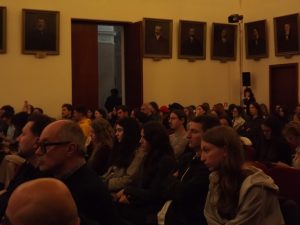
The conference attracted a diverse audience of students, practitioners, and representatives of local institutions, reinforcing FAST’s mission to create spaces where professional debate becomes accessible and relevant to the wider public. As part of the broader FAST 2025 program, the panel contributed to an ongoing reflection on how the profession can actively rebuild and maintain trust through transparent processes and shared standards of excellence.
Photo credit: Avasilcai Maria, Popa Mara Alexandra