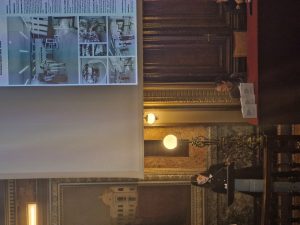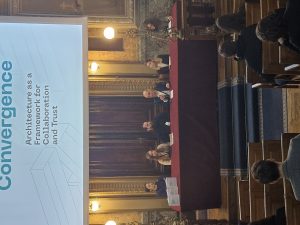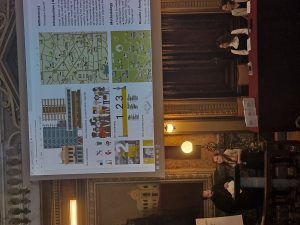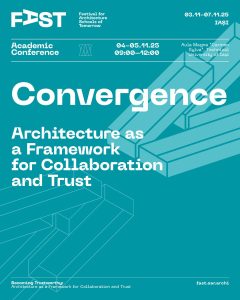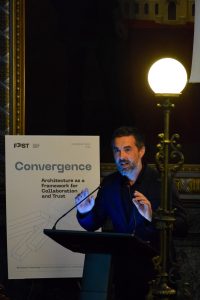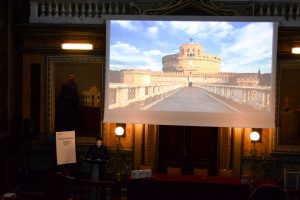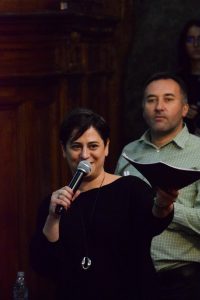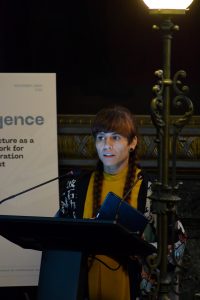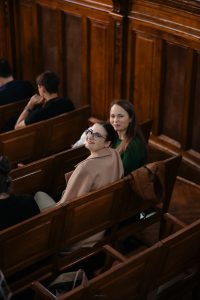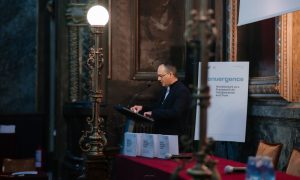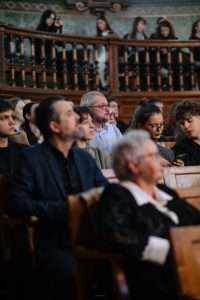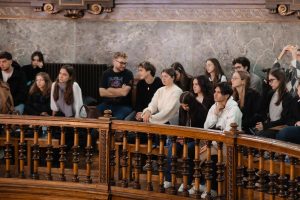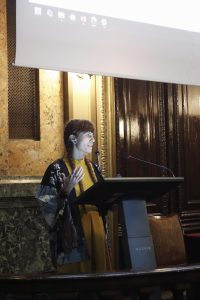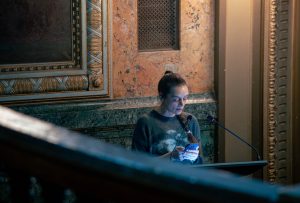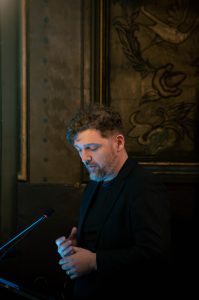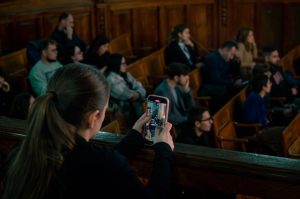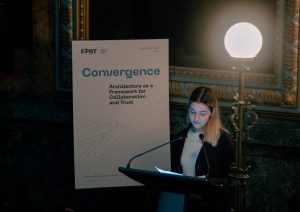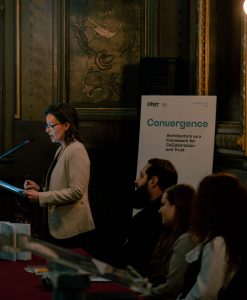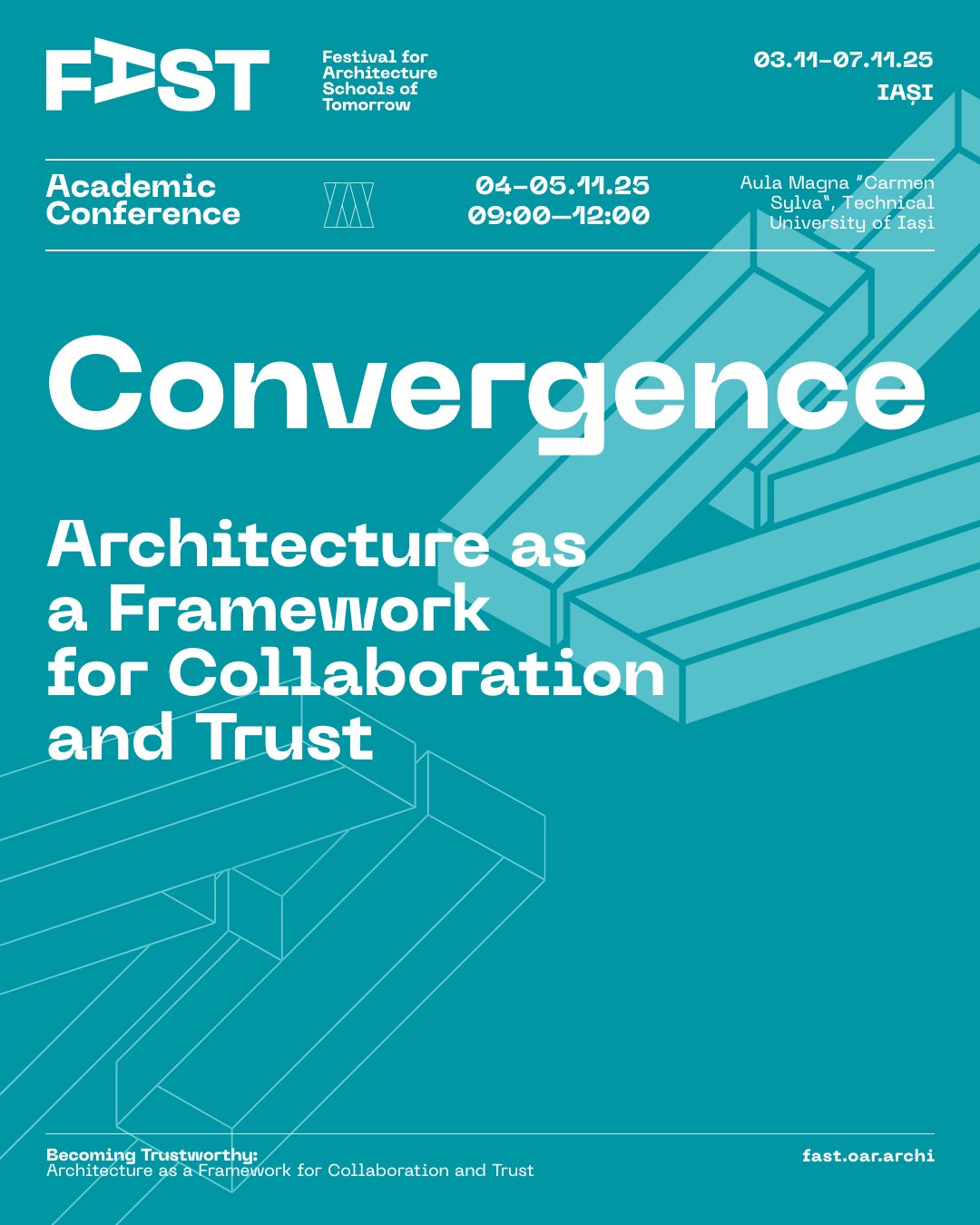
At FAST: Festival for Architecture Schools of Tomorrow, the mornings of November 4 and 5 were spent at the Aula Magna “Carmen Sylva” of the Gheorghe Asachi Technical University of Iași, where the scientific conference CONVERGENCE: Architecture as a Framework for Collaboration and Trust unfolded as one of the festival’s central academic moments.
The conference was conceived as a space for reflection and exchange on the evolving role of architecture as a multidisciplinary medium, one capable of fostering collaboration, trust, and innovation in contemporary society. Over the course of two days, CONVERGENCE brought together scholars, educators, researchers, and practitioners from architecture, urban studies, engineering, and related fields, creating a shared platform for dialogue across disciplines. Within this setting, architecture was discussed not only as a professional practice, but as a cultural and operational framework through which collective action could be articulated and sustained.
The designation “Convergence” carried a layered meaning that resonated strongly with current architectural discourse. In a scientific and academic sense, convergence referred to the coming together of disparate elements—ideas, disciplines, technologies, and stakeholders—into a unified whole, often generating outcomes that exceeded the sum of their individual parts. This understanding closely aligned with contemporary architectural research and practice, where the discipline increasingly operated at the intersection of social needs, environmental concerns, and technological transformation. Architecture was thus framed as an integrative structure, one that facilitated cooperation and enabled shared responsibility within complex systems.
This conceptual foundation was closely connected to FAST’s broader thematic framework, “Becoming Trustworthy: Architecture as a Framework for Collaboration and Trust”. Rather than treating trust as an inherent or static quality, the conference approached it as a condition that architecture continuously had to earn. Trust was discussed as emerging through competence, care, accountability, and long-term engagement with communities and contexts. In this sense, architecture was repositioned as an active participant in a wider trust ecosystem—one in which built form, process, and decision-making were inseparable from ethical and social responsibility.
Throughout the conference, architecture was consistently understood as a living framework, rather than a fixed artifact. Presentations and discussions emphasized its capacity to mediate relationships between stakeholders, bridge cultural and disciplinary divides, and support collaborative modes of problem-solving. Convergence, in this context, was not merely a conceptual theme, but a necessary condition for addressing pressing global challenges, including climate change, social inequity, and the ongoing digital transformation of the built environment.
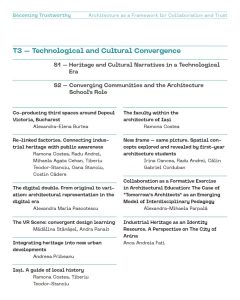
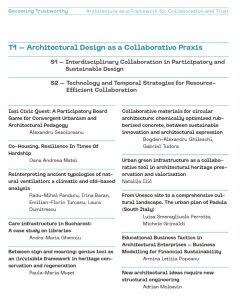
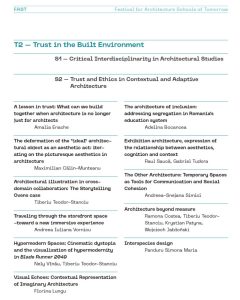
These conceptual directions were reflected directly in the structure of the conference programme. The two-day schedule was organized into thematic sessions that explored participatory and interdisciplinary design practices, sustainable and resource-efficient strategies, technological innovation and material experimentation, ethical considerations in architectural practice, and the reinterpretation of heritage as a cultural and social resource. A strong emphasis was also placed on architectural education, highlighting the architecture school as a formative environment where collaboration, critical inquiry, and trust-building practices were actively shaped.
The format of CONVERGENCE encouraged dialogue rather than isolated presentation. Each session was followed by engaged Q&A discussions, allowing ideas to be tested, expanded, and questioned collectively. The accompanying poster exhibition further extended the space for exchange, enabling more informal conversations between authors and participants and reinforcing the conference’s collaborative ethos.
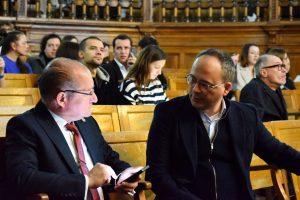
Over the two days, the conference generated sustained interest around the topics addressed. Attendance remained consistent, discussions were active, and the level of engagement reflected a clear need for such a forum within both the academic and professional architectural landscape. The diversity of perspectives and the depth of the debates demonstrated how strongly the theme of collaboration and trust resonated with current research concerns.
In retrospect, CONVERGENCE 2025 affirmed its role as a key academic pillar of the FAST festival. It reinforced the importance of research as an essential component of architectural culture and provided visibility to emerging and ongoing scholarly work. By bridging theory and practice, and by situating architecture within a broader network of disciplines and societal challenges, the conference contributed to strengthening a culture of collaboration and trust within the profession.
As part of FAST’s long-term vision, CONVERGENCE confirmed the role of architectural research as an active force in shaping the future of the built environment, one grounded not only in design excellence, but also in shared values, collective knowledge, and the continuous process of becoming trustworthy.
Photo credit: Avasilcai Maria, Costoaea Anghelina, Dodo, Bumbu Oliver