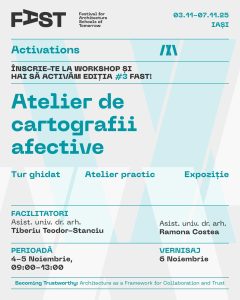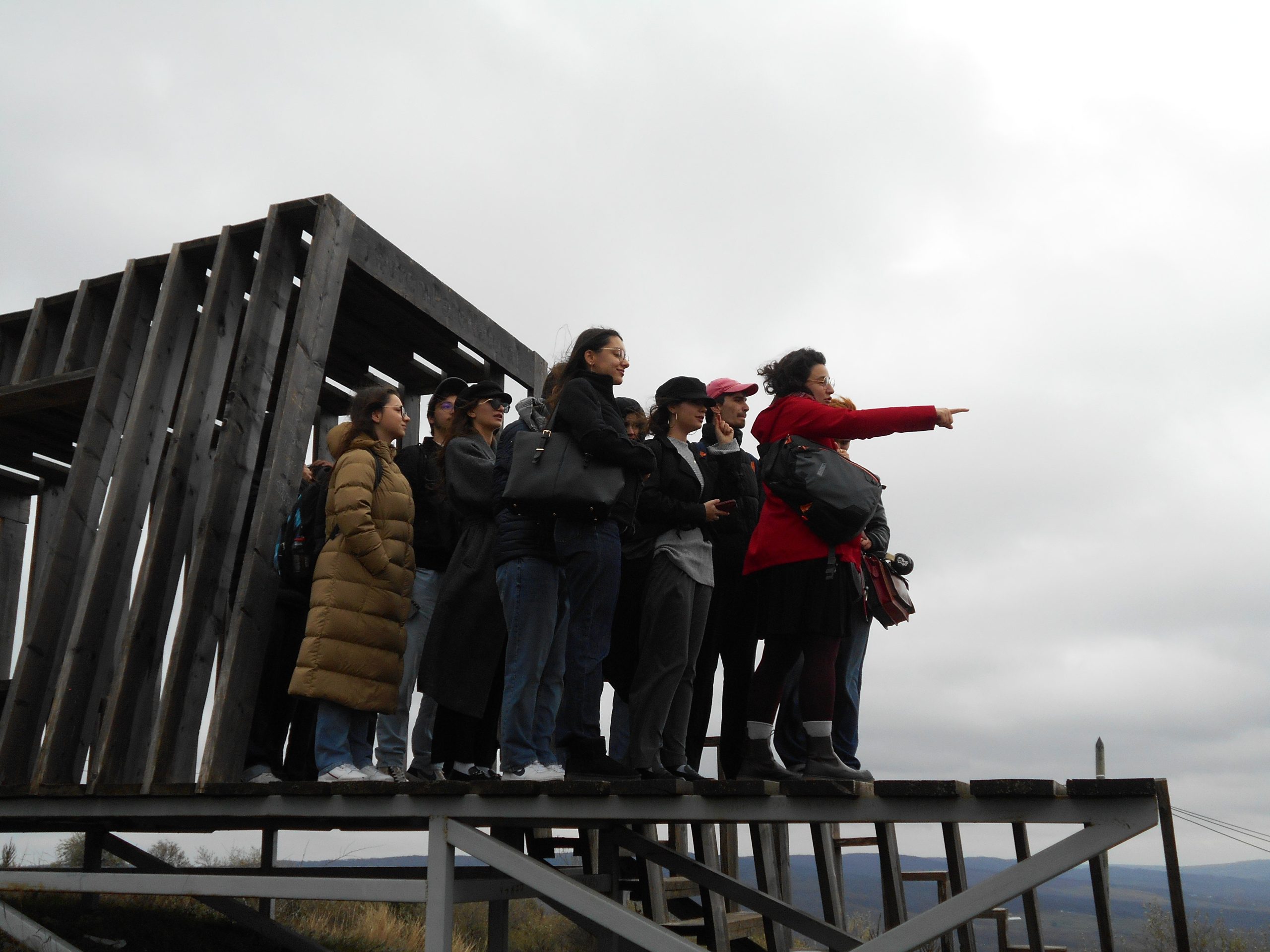
The Affective Cartographies workshop, facilitated by Assist. Prof. PhD Arch. Tiberiu Teodo-Stanciu and Assist. Prof. PhD Arch. Ramona Costea, took place on 4-5 November 2025, between 9:00–13:00, bringing together 15 architecture students (three from each participating faculty).
The workshop unfolded across two complementary settings, the historic center of Iași and the FAST workshop space at the Faculty of Architecture, and proposed a poetic investigation into the relationship between city, perception, and memory.
Designed specifically for architecture students, the workshop encouraged participants to explore the city not only as built fabric, but as a field of emotions, recollections, and personal interpretations. Guided by the facilitators, students approached urban space as a living archive shaped by subjective experience. The theme of convergence framed the process: individual perceptions gradually merged into a collective emotional map.
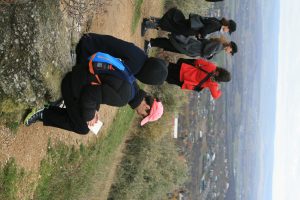
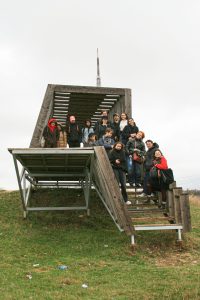
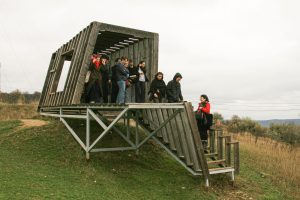
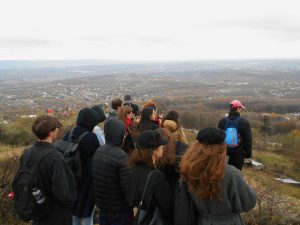
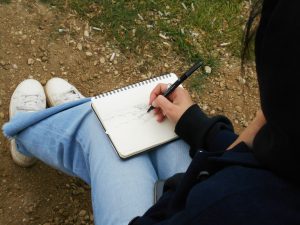
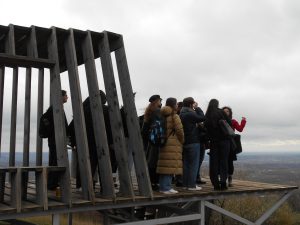
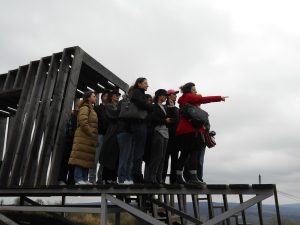
The first stage consisted of a two-hour guided sensory walk through central Iași. Participants documented the city through photography, handwritten notes, and rapid sketches, focusing on textures, rhythms, atmospheres, fragments of sound, and fleeting impressions. Rather than analyzing infrastructure or typology, students explored how the city is felt and remembered. This exploratory phase emphasized intuition, attention, and emotional awareness as architectural tools.
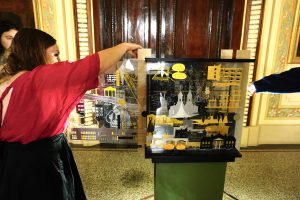
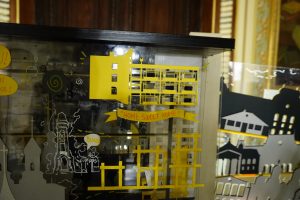
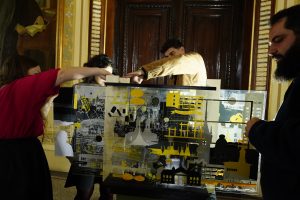
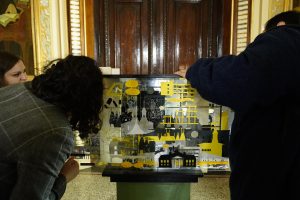
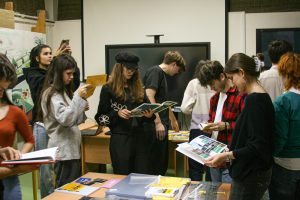
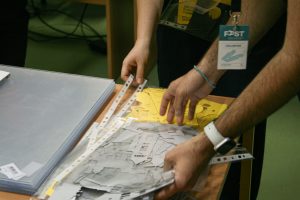
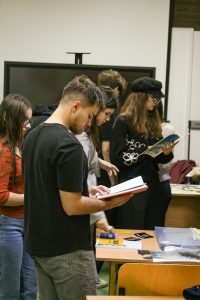
Back in the workshop space, the group translated these experiences into physical artifacts. Each participant produced a two-dimensional collage on a 50 × 50 cm plexiglass panel, layering cut silhouettes of buildings with drawings and handwritten text in white marker. The transparent surfaces allowed overlapping narratives to coexist, symbolizing how multiple readings of the same city can occupy the same space.
All works were assembled into a shared installation resembling sliding dioramas, which could be rearranged and viewed from multiple angles. This format highlighted the fluidity of perception and invited viewers to actively reinterpret the collective map. The final results were presented during a public vernissage on 6 November 2025, marking the culmination of the workshop.
The atelier was widely appreciated for the type of experience it generated: immersive, reflective, and collaborative. Students explored the emotional dimension of architecture and urban space, developing new ways of observing, recording, and translating lived experience into visual language. Supported and guided by experienced architects and educators, the workshop created a rare environment where poetic inquiry and architectural thinking converged, reinforcing the idea that cities are not only constructed, they are continuously felt, remembered, and rewritten by those who inhabit them.
Photo credit – Matei Ana Maria, Apetrii Maria